
Compare Wellness Solutions for Your Lifestyle
With so many options available in the Indonesian market, choosing the right supplement can feel overwhelming. This comparison guide is designed to help you distinguish between various nutrient profiles, ingredient sources, and supplement formats. By understanding the differences, you can make an informed decision that aligns with your personal wellness goals and daily habits.
- Capsules vs Powders01
- Single vs Complex02
- Natural vs Synthetic03
- Extracts vs Whole Herbs04
- Dosage Framework05
- Bioavailability06
- Cost vs Value07
- Activity Level08

Format and Nutrient Profile — Side by Side
Capsules vs. Powders
The format of your supplement affects both convenience and absorption. Capsules are ideal for those with a busy commute in Jakarta who need a quick, tasteless option, while powders can be easily mixed into morning smoothies for a more integrated nutritional experience.
We compare the shelf-life and portability of each to help you choose the best fit for your routine — whether that means a container that lives on your desk or a pouch that travels in your bag.
- Attribute
- Capsules
- Powders
- Portability
- High — pocket or pouch
- Moderate — measured scoop
- Taste
- Neutral, no aftertaste
- Varies by formula
- Shelf life
- Longer, sealed unit
- Shorter once opened
- Best for
- Daily commuters
- Smoothie routines
Single Nutrients vs. Complex Formulas
Sometimes you need a specific boost, like Vitamin D, while other times a comprehensive multivitamin is more appropriate. Single-nutrient supplements allow for precise dosing, whereas complexes provide a synergistic blend of vitamins and botanicals.
We discuss how to determine which approach is right for your current wellness status — and why stacking individual nutrients requires more attention to total intake than a pre-balanced complex that already accounts for how vitamins interact.
- [A] Single nutrient — use when targeting one known gap in your diet, such as Vitamin C during seasonal changes.
- [B] Complex formula — use when general coverage matters more than targeting one nutrient; the blend is pre-balanced for you.
- [C] Mixed approach — a daily complex plus one targeted single nutrient; check totals to avoid over-consumption.

Synthetic vs. Natural Sourcing
Not all vitamins are created equal; some are synthesized in a lab while others are derived from whole-food sources. Naturally sourced vitamins often come with co-factors — companion compounds that can aid in absorption and how the body recognizes the nutrient.
Our comparison highlights the benefits of plant-based extracts and how they differ from their cheaper, synthetic counterparts. For men in Indonesia looking at daily wellness maintenance, the sourcing question often comes down to whether you want an isolated compound or a nutrient delivered in the way plants naturally package it.
Naturally sourced options tend to carry trace minerals and secondary compounds from the original plant. Synthetic versions offer consistency and cost advantages but may lack those companion elements. Neither is inherently wrong — the right choice depends on what you are trying to support and your budget.
Standardized Extracts vs. Whole Herbs
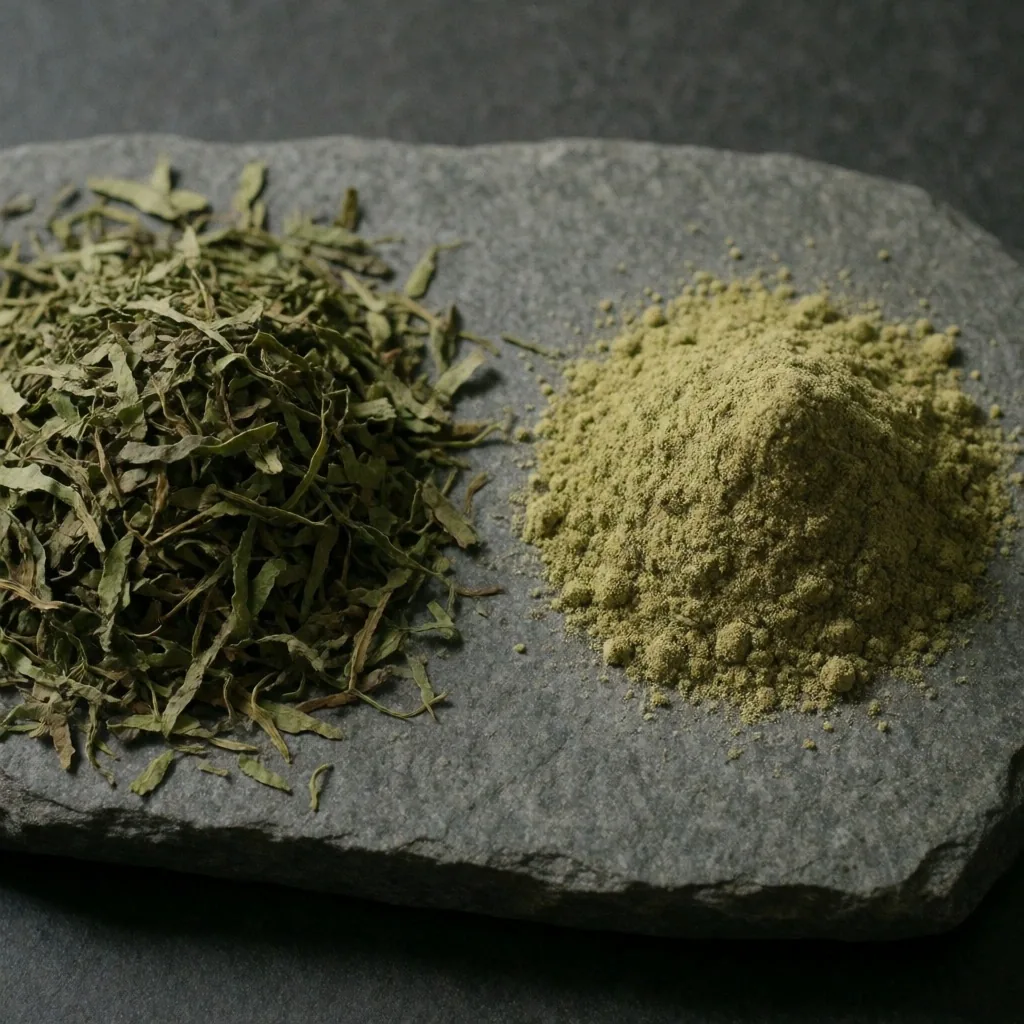
When looking at botanical supplements, you will often see the term “standardized.” This means the product contains a guaranteed amount of the plant's active ingredient — so each serving delivers the same concentration, batch after batch.
We compare this to traditional whole-herb powders, explaining why standardization is generally preferred for achieving consistent results in modern wellness routines. Whole-herb powders contain everything the plant offers, but the concentration of the active compound can vary with soil, harvest time, and drying method.
If you are tracking how a botanical supports your daily routine over weeks or months, a standardized extract gives you a reliable baseline. If you prefer the full spectrum of the plant and are less concerned about hitting a specific concentration, whole-herb powders remain a valid traditional choice.
Understanding Dosage and Potency
Higher dosage does not always mean higher quality. The body can only absorb a certain amount of specific vitamins at one time, and “megadosing” can sometimes lead to waste or imbalance. More is not the same as better — it can mean the difference between a nutrient your body uses and one it simply processes out.
We provide a framework for understanding daily values (DV) and how to read supplement labels to avoid over-consumption. The DV figure on a label tells you what percentage of a general daily reference the serving provides — a useful baseline, though your personal needs may differ based on diet, activity, and individual factors.
- 01 Serving size — the amount the DV percentages are based on. One serving may be one or multiple units.
- 02 DV percentage — how much of a general daily reference one serving provides.
- 03 Form of nutrient — the specific chemical form, which affects how well your body can use it.
- 04 Total per day — add up all supplements and fortified foods to check the combined intake.
Bioavailability and Absorption Enhancers
Fat-Soluble Vitamins
Vitamins A, D, E, and K are absorbed more effectively when taken with a meal that includes some dietary fa. A supplement taken on an empty stomach may pass through without delivering its full value.
Botanical Extracts
Certain botanicals are more effective when paired with black pepper extract (piperine) or healthy fats. Some formulations include these enhancers so the active compound reaches your system rather than being broken down first.
Mineral Combinations
Some minerals compete for absorption when taken together. Iron and calcium, for example, are better absorbed when spaced apart rather than taken in the same serving. Check whether a complex accounts for these interactions.
Some nutrients are difficult for the body to absorb on their own. We compare different formulations to show you which ones include these necessary enhancers for maximum nutritional impact — and which ones leave you to manage the pairing yourself through food timing.
Cost vs. Value in Supplements
It is tempting to choose the least expensive option, but in wellness, you often get what you pay for in terms of purity and testing. We break down how to evaluate the “price per serving” alongside the quality of ingredients.
A lower sticker price can mean fewer active compounds per capsule, fillers that bulk up the serving without adding nutritional value, or a form of the nutrient that your body absorbs poorly. A higher price per unit can reflect standardized extracts, third-party testing, or a more bioavailable form of the same vitamin.
Investing in a higher-quality supplement can often lead to better long-term value for your health — not because expensive means better, but because the cost-per-nutrient-absorbed can actually be lower when the formula is built to deliver.
- ■ Price per serving, not per container
- ■ Whether the nutrient form is well-absorbed
- ■ Standardized extract vs. whole-herb powder
- ■ Fillers and binders listed in the ingredients
- ■ Whether absorption enhancers are included
Tailoring to Your Activity Level
An office-based professional has different nutritional needs than a competitive athlete or a manual laborer. We categorize supplements based on activity levels, helping you find products that support either high-intensity physical recovery or sustained mental focus for sedentary work environments.
Sedentary Office
Active Commuter
High-Intensity Athlete
Manual Labor
These profiles are a starting point, not a fixed prescription. Your actual needs depend on diet, age, sleep, and other personal factors. For guidance specific to your situation, our team can walk through the options with you.
Where to Go From Here
FAQ on Usage
Common questions about supplement formats, timing, label reading, and how to combine different products without over-consuming specific nutrients.
Read the FAQContact an Expert
If you are comparing options and want a second opinion on which format or formula suits your routine, our Jakarta office can help you think it through.
- Address
- Jl. Asia Afrika No. 19, Gelora, Tanah Abang, Jakarta Pusat, 10270
- Phone
- +62 21 5790 9900
- [email protected]
- Hours
- Mon–Fri, 09:00–18:00 WIB